

Search bathroom remodel near me and the results mix three very different businesses: one-day shower and tub specialists, national installers working through a big-box store, and local remodeling contractors who handle demo through finish work. They are not interchangeable, and picking the wrong category is the most common reason a bathroom project goes sideways.
The sorting question is simple. Is your bathroom getting a surface refresh, a mid-range update, or a full gut where walls open and plumbing moves? Answer that first, and the shortlist narrows itself.
Quick answer: A “bathroom remodel near me” search returns three different business types: one-day tub and shower specialists, big-box installers, and local remodeling contractors. Match the company to your scope — surface refresh, mid-range update, or full gut — then verify Washington registration, bonding and insurance before you compare written bids line by line.
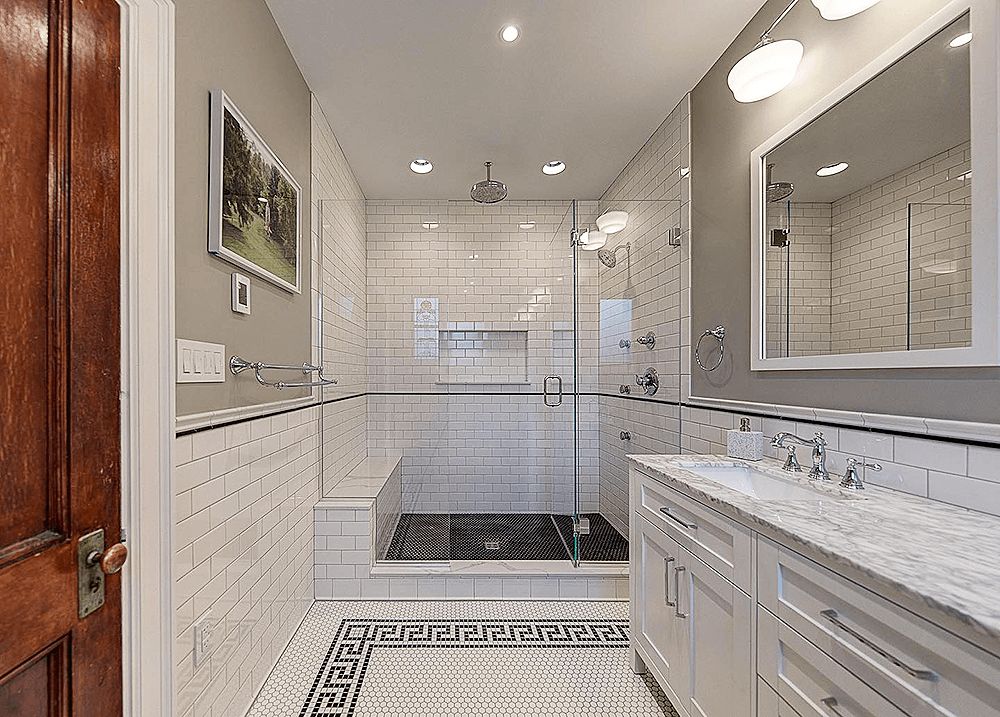
What a “bathroom remodel near me” search actually returns
The paid results at the top are usually acrylic liner and shower-system companies. They do one thing fast: replace a tub or shower surround with a manufactured insert, often in a day or two. If your tile is sound and your layout works, that can be a reasonable fit. If your subfloor is soft or your vanity wall needs to move, it isn’t.
Below that sit the map results and organic listings — a blend of general contractors, remodelers, tile specialists and handyman companies. A handyman outfit can swap a vanity, a toilet, a light fixture and a floor. A remodeling contractor handles the same work plus framing changes, relocated drains, new circuits and the permit paperwork that comes with them.
Distance matters less than most people assume. A crew based twenty minutes away that specializes in wet-area tile will serve you better than a company around the corner that does bathrooms twice a year. Use proximity as a tiebreaker, not a filter.
Pick your scope before you call anyone

Contractors quote scope, not square footage. Two bathrooms the same size can differ enormously depending on whether the plumbing stays put. Here’s how the three common tiers break down.
| Scope | Typically includes | Plumbing/layout | Usual duration | Permit likely? |
|---|---|---|---|---|
| Cosmetic refresh | Paint, vanity swap, faucet and showerhead, mirror, light fixture, floor tile | Fixtures stay in place | 3–5 days | Usually no |
| Mid-range update | New shower tile and pan, waterproofing, vanity and top, toilet, flooring, exhaust fan | Same footprint, new valves | 1–2 weeks | Sometimes |
| Full gut | Down to studs, tub-to-shower conversion, new drain locations, added circuits, niches and benches, frameless glass | Layout can change | 2–3 weeks | Usually yes |
Those timelines assume materials are on site before demo starts. Special-order tile, a custom glass enclosure or a back-ordered vanity can stretch a two-week job into a month of waiting with a tarp over the doorway. Order early.
Where the scope usually grows
- Moving a toilet or shower drain. That means cutting concrete or opening the floor below, and it changes the job category entirely.
- Old subfloor damage. Decades of a leaking shower pan shows up the moment tile comes off.
- Knob-and-tube or undersized wiring. Common in older Tacoma and Lakewood homes, and an upgrade is often required once the wall is open.
- No working exhaust fan. Adding one means duct routing to the exterior, not just an outlet.
How to vet a bathroom remodeling contractor in Washington
Washington requires construction contractors to register with the Department of Labor & Industries, carry a bond and maintain liability insurance. You can check any company’s registration status, bond, insurance and lawsuit history yourself through the L&I Verify a Contractor tool. Do it before the estimate visit, not after.
Beyond registration, a few checks separate the serious bidders from the rest:
- A written, itemized estimate. Line items for demo, waterproofing, tile setting, fixtures and finish carpentry — not one lump sum.
- A clear allowance structure. If tile and fixtures are budgeted as allowances, ask what happens when your selections come in above or below.
- A change-order process in writing. Nobody can see inside a wall. What matters is that you get options and pricing before anyone proceeds.
- Photos of their own wet-area work. Ask to see a shower niche, a curb and a bench in progress — before the tile went on.
- Who actually shows up. Employees, long-term subs, or a rotating cast? Continuity is why finish details match at the end.
Get two or three bids, and read them side by side rather than bottom line to bottom line. The cheapest number often excludes waterproofing membrane, a new valve, or haul-away — all of which you’ll pay for eventually.
Permits, code and inspections in Pierce County
Like-for-like cosmetic work — paint, a vanity swap, new floor tile — generally doesn’t require a permit. Once you alter plumbing lines, add or move electrical circuits, or change framing, you’re usually in permit territory. Tacoma, Lakewood, University Place, Puyallup, Gig Harbor and unincorporated Pierce County each run their own permit counter with their own thresholds and application steps, so confirm the requirements with the jurisdiction your address falls in before demo day — and settle in writing who pulls the permit and schedules inspections.
Ventilation is the requirement homeowners overlook most often. Washington’s residential energy and mechanical codes, adopted by the State Building Code Council, set exhaust requirements for bathrooms — and in a climate this wet, a properly sized fan ducted to the outside does more for the life of your tile and paint than any premium finish.
A permitted job leaves a record. That matters at resale, and it matters if a future insurance claim traces back to a shower that was never inspected.
What actually drives the cost
We don’t publish figures here because material and labor pricing moves, and any number that isn’t tied to your specific bathroom is fiction. What we can tell you is what moves the needle, roughly in order of impact:
- Whether plumbing moves. Keeping fixtures in place is the single biggest lever on the total.
- Tile selection and layout. Large-format porcelain, mosaics, herringbone and mitered edges all add labor hours beyond the tile price itself.
- Shower construction. A tiled pan with a linear drain, a bench and multiple niches is a different build than a prefab base.
- Glass. Framed doors, semi-frameless and custom frameless enclosures sit at very different points.
- What’s behind the wall. Rot, failed waterproofing, old galvanized supply lines and undersized wiring are discovered, not quoted.
- Fixture tier. Valve brand, vanity construction and countertop material spread widely. EPA WaterSense-labeled faucets and showerheads cut water use without a performance penalty, which is worth asking about while you’re choosing.
If you want ranges specific to this market, we keep a detailed breakdown in our guide to bathroom remodel costs in Tacoma, updated with what local projects are actually running.
The part you can’t see: waterproofing and tile prep
Most failed showers don’t fail at the tile. They fail at the membrane, the pan slope, the corner detail or the change of plane where a rigid grout line should have been flexible sealant. The Tile Council of North America publishes the installation methods and ANSI standards that define how wet-area assemblies are supposed to be built, and a contractor who can name the method they’re using is telling you something useful.
Questions worth asking during the estimate:
- What waterproofing system goes behind the tile — sheet membrane, liquid-applied, foam board?
- How is the pan sloped, and is it flood-tested before tile goes down?
- What mortar and grout are specified for a wet area, and why?
- How are inside corners and the tub-to-tile transition handled?
- Is the substrate cement board, or moisture-resistant drywall where that’s appropriate?
A crew that answers these quickly and specifically is a crew that has built a lot of showers. Vague answers here are the clearest warning sign in the whole process.
Layout decisions that pay off later
Small bathrooms reward planning more than spending. Industry planning guidelines from the National Kitchen & Bath Association cover clearances in front of fixtures, door swings, and recommended dimensions — the details that decide whether a room feels cramped after everything’s installed.
A few choices that consistently earn their keep in Pacific Northwest homes:
- Tub-to-shower conversion in a hall bath — as long as the house keeps at least one tub for resale.
- Blocking behind the walls for future grab bars, installed now while the studs are exposed. Cheap insurance for aging in place.
- A recessed niche sized to your bottles, not to a standard tile module.
- Separate switching for the fan and the light, or a humidity-sensing fan that runs on its own.
- Curbless or low-curb entries, where the floor framing allows the drop.
If you’re gathering visual direction, our design ideas page is a decent place to start narrowing tile, vanity and fixture combinations before you sit down with a contractor.
Living through it
If it’s your only full bathroom, plan for the days you won’t have a working shower — typically from demo through the tile cure and glass install. Ask the contractor to spell out which days those are in the schedule, not to estimate it verbally.
Also settle the practical stuff up front: work hours, dust containment and floor protection through the hallway, where materials get staged, whether the driveway is needed, and who hauls debris. These aren’t glamorous questions, but they’re the ones that determine whether three weeks of construction feels manageable.
Putting it together
Define the scope, verify the license and bond, compare itemized bids rather than totals, confirm the waterproofing method, and get the permit question answered before demo day. That sequence handles nearly every problem homeowners run into with bathroom projects.
Magenta Home Services handles bathroom remodels across Tacoma, Lakewood, University Place, Fircrest, Ruston, Puyallup, Spanaway and Gig Harbor — you can see the full list on our areas we serve page, or read how we approach projects in Tacoma specifically. When you’re ready to walk your bathroom with someone and talk through scope, reach out through the site and we’ll set up a time.
Frequently Asked Questions
How do I find a good bathroom remodel contractor near me?
Start by matching scope to specialty, then verify registration, bonding and insurance through Washington L&I. Ask for photos of in-progress wet-area work, an itemized written estimate, and a written change-order process. Get two or three bids and compare line items rather than totals — the cheapest number often leaves out waterproofing or haul-away.
How long does a bathroom remodel take?
A cosmetic refresh generally runs three to five days. A mid-range update in the same footprint usually takes one to two weeks, and a full gut with moved plumbing runs two to three weeks. Those timelines assume all materials are on site before demo. Special-order tile, vanities or custom glass can add weeks of waiting.
Do I need a permit to remodel a bathroom in Tacoma?
Like-for-like cosmetic work — paint, vanity swaps, new flooring — generally doesn’t need one. Moving plumbing, adding or relocating electrical circuits, or altering framing typically does. Requirements vary by jurisdiction, so confirm with the City of Tacoma or your local permit counter, and ask your contractor who is responsible for pulling and scheduling inspections.
Is a tub-to-shower conversion worth it?
In a secondary or hall bathroom, usually yes — walk-in showers get used more and read as an upgrade to buyers. Keep at least one bathtub somewhere in the house for resale and for families with small children. The conversion involves demo, a new pan or tiled floor, waterproofing, wall tile, glass and plumbing trim.
What should be included in a bathroom remodel estimate?
Look for demo and disposal, any framing changes, plumbing and electrical rough-in, the specific waterproofing system, substrate, tile setting labor, fixtures and trim, glass, paint and finish carpentry. Allowances for tile and fixtures should state what happens if your selections cost more or less. Permit responsibility and a payment schedule belong in there too.
Should I buy my own tile and fixtures?
Either approach works with most contractors. Supplying your own materials gives you control over selection and sometimes cost, but you own the timing and any shortages or damage. If you do source your own, confirm each product is rated for wet-area use — floor tile ratings, valve compatibility and mortar requirements all matter more than appearance.
